

 Gentle Teaching is not about hugs: it is about teaching marginalized others the feeling of safe and loved and deepening its meaning through culturally meaningful rituals and customs.
The use of the word to bring us together is a universal fact and its power can be used to lift up a person or slam a person down. We often find it difficult to dialog with marginalized individuals with words filled with love and goodness. If not flat and boring, our words are often condescending and instructional, always correcting the person and taking a “You should know better…” approach.
Our understanding of the power of our words, for good or bad, emerges out of our understanding of human sorrows, often described as “always complaining” or “griping.” Our words should come out of our mouths as if each sound were an embrace and, thereby, uplifting the person and helping to form self-esteem.
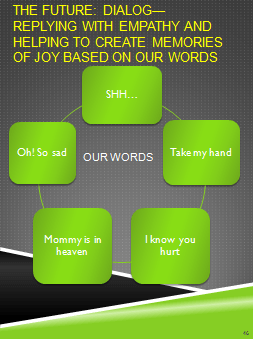
I recall a young woman tied to a metal bed who had been lamenting about the baby that had been taken from her 11 years earlier. Her screams were, “Where’s my baby. I want my baby.” She had broken lights and windows as staff ignored her cry for help. She was tied up. All that we can really do is respond with love and tenderness using few words, “Oh! So sad… Shh.. I will just stay with you.” In the meantime, I recall that I repeated these phrases often and touched one of her tied hands as softly as I could as if she were my daughter. Sorrow does not need lengthy words. It does not need a logical response. It calls on us to share her sorrow, feeling that she feels deeply, but never knowing the depth and pervasiveness of her sorrow.

No comments!
There are no comments yet, but you can be first to comment this article.