

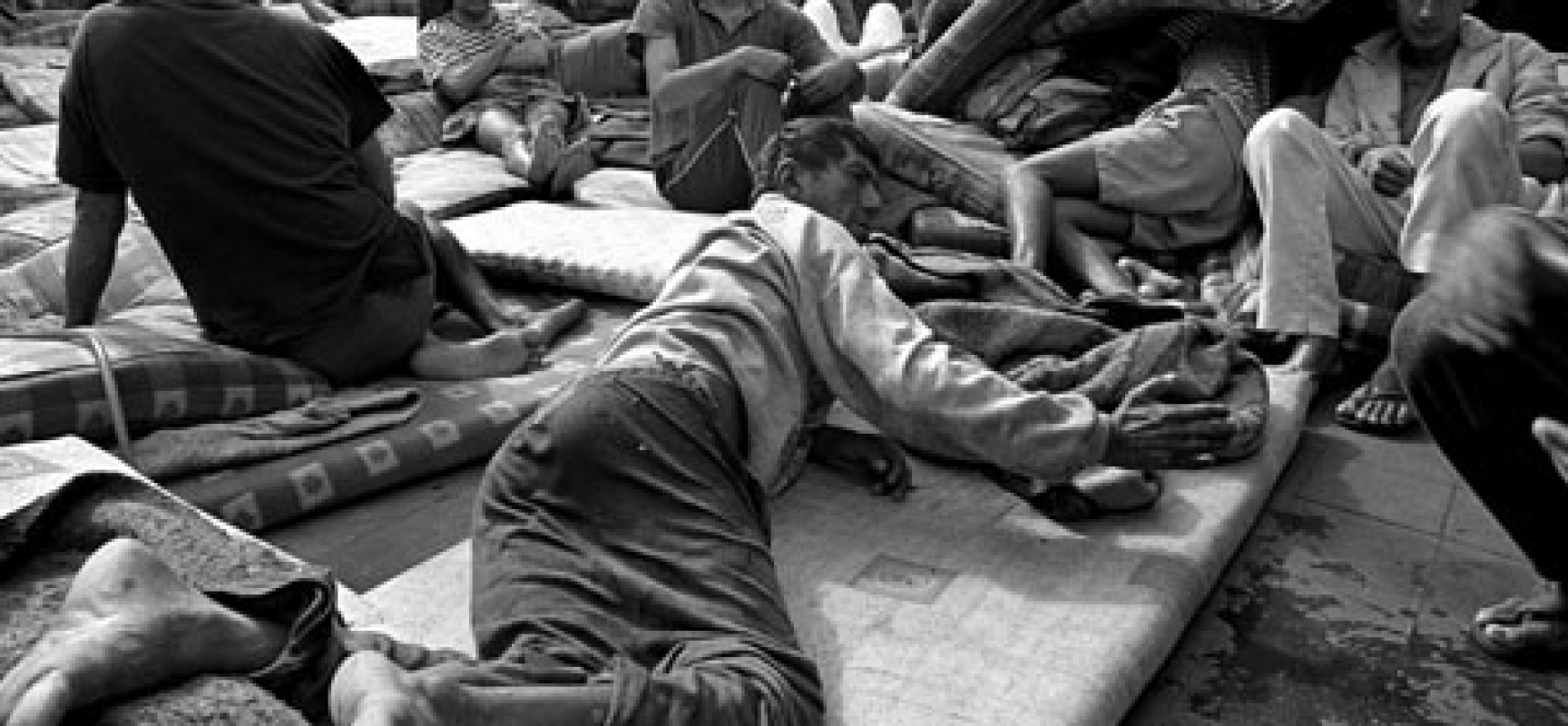
Four hundred sixty human beings in the Neuro-Psychiatric Hospital in Asunción, Paraguay, make a cry for justice. This report voices their plea. We write it and submit it to the parties with the deepest respect and hopefulness. We hope that the parties respond to these findings in a spirit of generosity with their ears and hearts sensitive to the voices crying out for bread, a decent home, justice, schooling work, and more active participation in the direction of society.”
In our observations, the hospital presented significant human rights violations, most notably in the form of an almost complete lack of treatment, sub-human living conditions, the extreme use of restraint in the form of locked buildings and prison-cells, and woefully inadequate, even dangerous, staffing patterns. The hospital posed horrendous neglect and sometimes life-threatening harm to the 460 human beings incarcerated there. At best, it represented a major public health hazard; at worst, it stood as a dehumanizing warehouse. In it, voiceless and vulnerable individuals live in a state of physical, political, and social segregation with virtually no regard for their human dignity or mental health needs. They are among the nation’s forgotten ones.
Contrary to its mission to enhance human lives, to prevent harm, and to assure citizens with mental illness the necessary degree of active treatment, the Neuro-Psychiatric Hospital presented significantly negative findings:
- Non-existent active habilitation resulting in a pervasive sense of hopelessness and psychological deterioration;
- Severe physical harm due to sub-human living conditions with open sewage, trash, and garbage present almost everywhere;
- The lack of any minimal hygiene and sanitation with foul smelling and filthy bathrooms and broken showers;
- The ubiquitous presence of holes-in-the-floor for toilets that were invariably clogged and caked with excrement and urine with some patients sleeping on floors next to these excrement filled and crusted hole-in-the-floor toilets;
- The lack of adequate medical, dental, and psychiatric support on an on-going or emergency basis;
- The widespread use of chemical restraint;
- The lack of psychiatric medications upon discharge from the hospital causing a revolving door policy at the hospital that eventually results in long term institutionalization; and,
- A sub-custodial and dangerous level of staffing.
Immediate Relief for Julio and Ramon
We pre-selected two patients (Julio and Ramon) for immediate relief within thirty days of submission of this report to the parties and their mutual agreement or, if necessary, within 30 days of a judicial order. Because of their on-going abusive and neglectful living conditions, their early childhood abandonment and subsequent detachment from significant others, and their long years of institutional incarceration, we ask the government’s urgent response to reach out to Ramon and Julio. They have suffered long enough. Immediate relief for Julio and Ramon should take the form of:
- The assignment of an outside monitor to oversee their rights;
- The development of a thorough medical and mental examination with a diagnostic work-up and specific treatment recommendations;
- The assignment and training of 1:1 staffing to implement active treatment goals, the assurance of freedom from further harm and neglect, and the initiation of a process that will guarantee them active treatment, human dignity, and community integration;
- The formulation of treatment goals based on their right to live in dignity and to receive adequate and appropriate psychiatric care and treatment;
- The development and implementation of a daily activity schedule that includes multiple activities in unlocked conditions with supportive caregivers;
- The on-going care of their bodily hygiene, grooming, and dressing throughout each day and zero-tolerance for bodily and environmental filth;
- The availability of an on-going supply of clean sheets, blankets, and
clothing to help ensure continuous cleanliness;
- The cleaning and painting of living spaces—floors, walls, beds and toilets;
- The opening up and on-going cleaning of their prison-cells throughout the day;
- The development of a life-story related to each to help caregivers understand these youngsters’ familial, developmental, and psychiatric history; and,
- The development and implementation of a person-centered plan for each as the central dimension for teaching Julio and Ramon to begin to feel safe and secure through on-going and unconditional nurturing.
For the full article download Neuro-Psychiatric Hospital in Asunción Paraquay
A photo story on the conditions can be seen at http://archive.poyi.org/items/show/43190

No comments!
There are no comments yet, but you can be first to comment this article.