

 This naming process or process of self-identification and self-esteem is foundational. Our sense of feeling connected with someone is based on a burgeoning realization that we might be able to feel safe with the other that then gradually becomes stronger and stronger and also begins to spread outwardly to a growing community of caring.
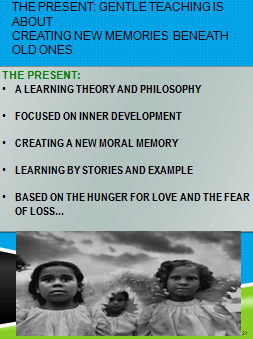
Since Gentle Teaching deals with moral development rather than behavioral change, we have to find new healing instruments and approaches. This also calls on us to put aside many of our care-giving biases such as the need for and the power of reward and punishment and the shallow objectivity demanded in the change process. Gentle Teaching calls on us to slowly and tenderly enter the other’s space without provoking any violence and give a sense of comfort that eventually turns into a deep feeling of being safe and loved. This process calls on our ability to express unconditional love during good moments and violent ones—a quite difficult thing for caregivers to do given the past decades emphasis on “earned reward.” Our expression of love is not contingent; it is given without any strings attached. We teach these new memories through our daily accidental encounters as well as planned encounters that are structured and in which the intention is to deepen and broaden the person’s sense of feeling safe and loved. This helps to create a new moral memory that will eventually involve a sense of trust and grow into a feeling of companionship.

No comments!
There are no comments yet, but you can be first to comment this article.